

Employers, lenders and landlords all use verification of employment to confirm you have a stable work history. During this process, the requesting party gathers information about your employment status, which helps determine whether you’re approved for a home loan, rental unit or job.
Learn more about employment verification, including what it is, why it’s important and how Truv uses technology to increase accuracy and prevent delays.
What Is Employment Verification?
Verification of employment confirms you’ve been employed over a certain period. It’s typically used in the following situations:
- Mortgage applications: When you apply for a mortgage, the lender needs to know you have a steady source of income. Employment verification helps show you meet the lender’s approval requirements.
- Rental applications: Landlords need to know you can pay the monthly rent. Employment verification is a key step in the approval process for apartments and other rentals.
- Employment applications: When applying for a job, you commonly provide detailed information about your employment history. Many companies use employment verification to determine whether the information is accurate.
Methods Companies Use for Employment Verification
Companies use several methods for verification of employment:
- Reference checks: Some employers hold off on making offers until they complete in-depth reference checks, which involve contacting previous employers by telephone or in writing.
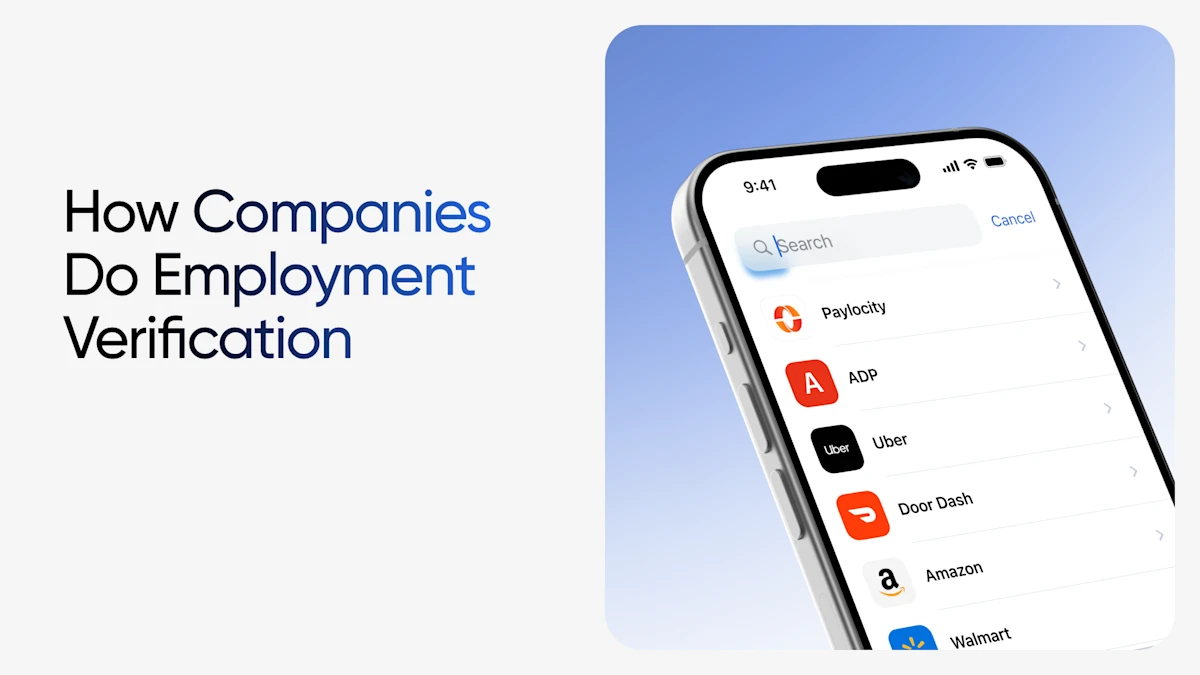
- Third-party verification services: Third-party employment verification companies use consumer-permissioned data to enhance accuracy and speed up the verification process. For example, Truv employment verification lets you connect directly with payroll providers, making it possible to complete the verification process in several minutes. Consumer-permissioned solutions are extremely accurate and secure.
- Direct HR contact: Lenders, landlords and prospective employers may contact HR departments directly through a process known as manual verification.
- Manual document upload: You may have to upload pay stubs, bank statements, W-2 forms and other documents for manual review.
- Instant database checks: Legacy systems gain access to their data via partnerships between employers and payroll providers. Each system buys relevant data and charges a premium for lenders, landlords and prospective employers to access it.
Key Information Verified During the Process
During verification of employment, the requesting party typically confirms your job title, salary, start date and end date. Some cities and states prohibit employers from collecting salary data during the verification process.
For example, New York forbids employers from asking candidates about their salaries. It’s also illegal to obtain salary information from other sources, including employment verification services. With Truv’s solutions however, you can be assured that your verification process complies with regulations.
Accuracy is critical, especially if you’re applying for a mortgage. Data errors often lead to delays, causing borrowers to miss out on low interest rates or other favorable loan terms. Inaccurate data may even cause your application to be denied.
Using accurate data sources also reduces the back-and-forth between you and your lender. When lenders use manual verification methods, they may request additional information or contact you to ask questions about the documents you provided, increasing the approval time.
Overall, accurate employment verifications reduce processing times and simplify the process of qualifying for a home loan.
Common Challenges in Employment Verification
It’s common to encounter these challenges when using manual verification or instant database checks:
- Outdated information: Instant databases are only as good as their current records at the time of the request, due to the data not being retrieved in real-time.
- . If a requesting party receives outdated data, they can’t complete your verification in a timely manner.
- Lack of standardization: Many employers have their own verification processes, some of which are complex. This lack of standardization increases the time it takes for a lender, landlord or prospective employer to complete your verification.
- Inaccurate data: Depending on the verification method used, the requesting party may receive inaccurate data. For example, one of your previous employers may provide incorrect job titles or dates of employment.
The Role of Technology in Modern Employment Verification
Consumer-permissioned verification providers use application programming interfaces (APIs) to help you connect directly to your payroll providers. This eliminates the need for time-consuming manual processes and increases accuracy by giving lenders, landlords and employers access to real-time data from the original source.
Truv also has an AI-assisted document upload solution, which makes it easy for borrowers to provide income and employment data. His is designed to serve as a fallback solution to payroll provider connectivity directly within the Truv interface to simplify the delivery of documents to the requesting party. Built-in AI tools help lenders verify the authenticity of each document, reducing processing times and speeding up the approval process.
Consumer-permissioned verification also enhances security, as it uses industry-leading encryption methods to prevent unauthorized access to your data.
How to Prepare for Employment Verification as an Employee
With consumer-permissioned verification, there’s no need to notify your employer of upcoming verification requests or store hard copies of pay stubs. You can simply log in to your payroll provider, which takes an average of 30 seconds. Consumer-permissioned data is paperless, so there’s also no need to wait for income and employment verification letters.
If your lender, prospective employer or landlord uses manual verification, follow these tips to prevent delays:
- Keep your reference list updated.
- Notify previous employers about potential verification requests.
- Ensure your employment history is consistent.
- Keep hard copies of pay stubs, tax returns and other verification documents handy.
FAQs
What do companies use to verify employment?
Companies may use manual verification, instant database checks or consumer-permissioned verification to verify employment statuses. Consumer-permissioned verification is the fastest, most accurate option.
How long does it take to verify employment?
With manual verification, it may take several days or weeks to complete the process, as some employers don’t respond to verification requests right away. Consumer-permissioned verification produces instant results, speeding up the process.
How does the verification process work?
During the verification process, landlords, lenders and prospective employers request information about your job titles, employment dates and salary history (if allowed).


