

When you apply for a mortgage, you must provide proof of employment to demonstrate you’re a responsible borrower. The process varies depending on your lender, so you may have to do manual, digital or consumer-permissioned verification.
Manual verification (manual, phone calls, fax HR outreach) has fallen out of favor due to the time it takes to complete. Lenders are using digital tools to increase accuracy, reduce risk and speed up the loan approval process. This article offers detailed guidance on providing proper employment verification for a home loan application.
What Is Employment Verification, and Why Do You Need It?
Income and employment verification is the process of confirming your recent work history. Banks, mortgage companies and landlords use employment verification to assess your credibility and determine whether you have a steady source of income.
Employment verification also reduces the risk of fraud and ensures transparency in financial transactions. For example, when you complete income and employment verification for a home loan, the lender has a chance to confirm the information in your mortgage application. This makes it possible to spot discrepancies.
Common Methods to Obtain Proof of Employment
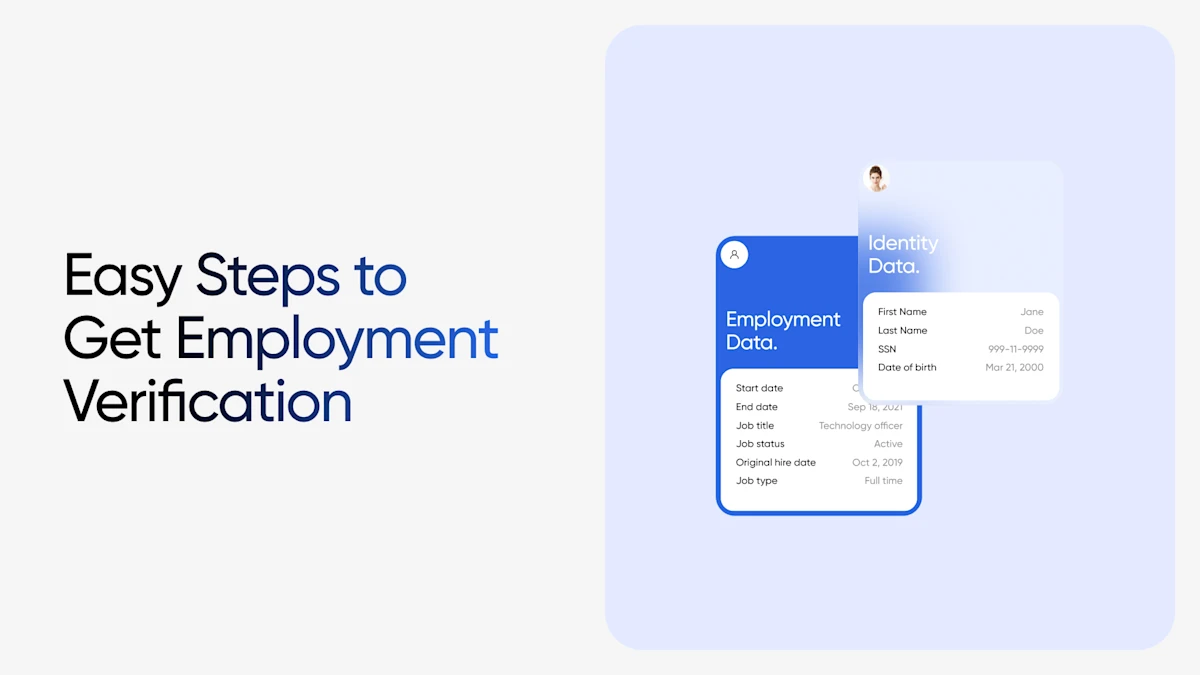
During the income and employment verification process, lenders collect information from several sources. Traditionally, applicants provide copies of their pay stubs or ask their employers to write verification letters. Income and employment verifications typically contain your start date, job title, employer details, income details, and salary, which can help a lender determine whether you meet the requirements for loan approval.
In some cases, applicants may provide alternative documentation. For example, if you don’t earn the same amount each month, your lender may ask you to provide bank statements. W-2s and tax returns are also helpful when completing employment verification for a home loan.
Manual verification is less common than it used to be. Lenders generally now use third-party income and employment verification services, such as Truv, to simplify the process. Truv uses consumer-permissioned data to automate employment verification across the country.
How Digital Tools Can Simplify Employment Verification
Consumer-permissioned data is a set of personal information shared with a third party. When you give a lender permission to access your data, you eliminate the need for manual verification, saving time.
Thanks to advanced technology, you can authorize secure access to your employment data for verification purposes. Using digital tools reduces paperwork, enhances accuracy and speeds up the mortgage process.
Truv streamlines the employment verification process by using API integrations to connect to employers and payroll providers. These integrations allow Truv to obtain real-time income and employment verification. Truv currently connects to more than 2.3M+ million employers across various industries, including:
- Benefits recipients
- Federal government
- Food service
- Fortune 1000 companies
- Gig platforms (e.g., Lyft, Etsy)
- Health care
- Military
- NASDAQ-listed companies
- Private companies
- Self-employed individuals
Our extensive network allows us to perform several types of verification with a high level of accuracy. For example, we can do federal employment verification for government employees.
In a study led by researchers from the Wharton School of the University of Pennsylvania, digital employment verification increased the loan origination rate by an average of 35.5%. The origination rate increased significantly for deep subprime borrowers (146%). Deep subprime borrowers have less-than-stellar credit, making it difficult to qualify for mortgages and other credit products.
What does this mean for you? Digital verification can improve your chances of getting approved by giving your lender quick access to your personal information.
Top Tips for Ensuring Smooth Employment Verification
Once you understand what income and employment verification means, you can take steps to ensure a smooth verification process.
- Maintain updated employment records. Document title promotions, recent job changes and other relevant information.
- Save your pay stubs, 1099 forms and W-2 forms for easier access during your employment verification for a home loan.
- Ask about your company’s procedures for providing proof of employment to mortgage lenders.
If you’re self-employed, you may face additional obstacles during the verification process since you can’t write a verification letter for yourself. You can overcome these obstacles by keeping good records. Profit-and-loss statements, 1099 forms, bank statements and self-employment pay stubs can all help you meet your lender’s requirements.
Some states have strict laws regarding income and employment verification and consumer privacy. For example, employment verification in California is more challenging due to the California Consumer Privacy Act, which aims to prevent unauthorized access to personal information.
How Truv Makes Income and Employment Verification Easy
Truv income and employment verification uses consumer-permissioned data to securely verify employment details, eliminating the need for manual documentation. Our APIs make it possible to connect with thousands of employers and payroll providers, resulting in fast, reliable verification across the United States.
Truv uses industry-leading security practices to protect your personal information. The platform is also extremely easy to use, whether you’re a consumer or an institution conducting a verification.
FAQs About Employment Verification
The answers to the following frequently asked questions can provide more information about employment verification.
What is a valid proof of employment?
Valid proof of employment is any official document that helps confirm your employment status and job history. Examples include pay stubs, employment verification letters and W-2 forms.
How do I provide proof of employment without pay stubs?
If you don’t have pay stubs, you may be able to verify your employment with bank statements, verification letters, 1099 forms, profit-and-loss statements or other documents.
How do I get proof of work from my employer?
To get proof of work from your employer, ask your HR department to prepare an employment verification letter. At a minimum, the letter should include your name, job title, salary and dates of employment.


