

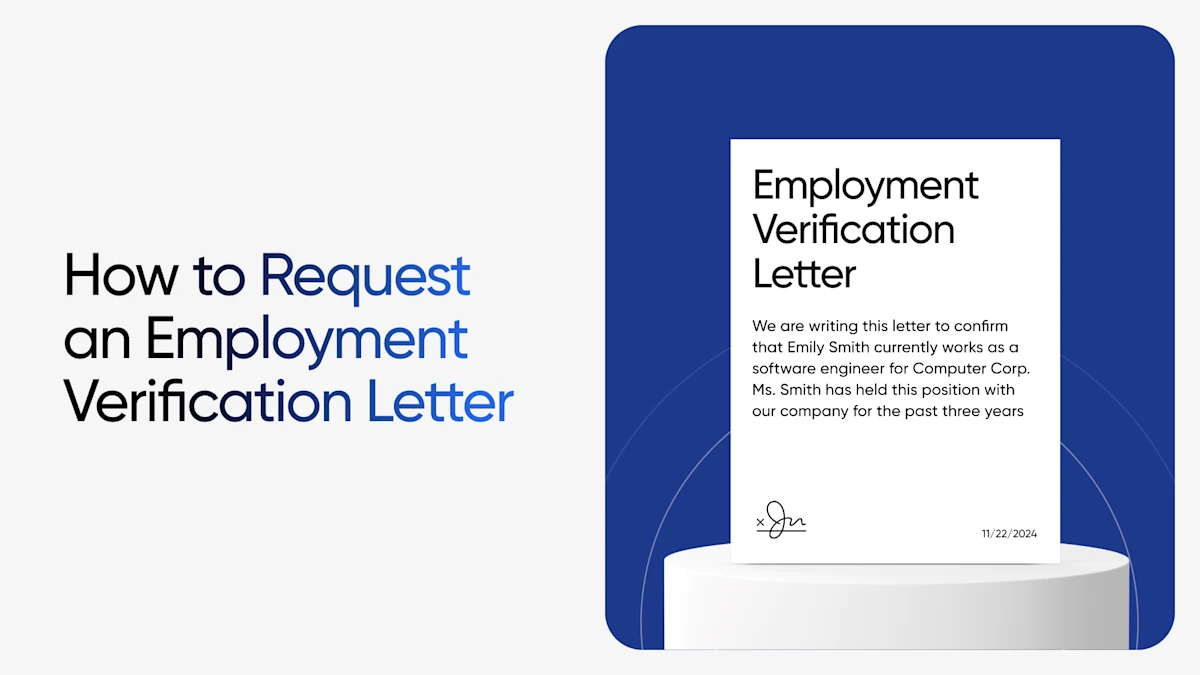
If you’re applying for a home loan, a rental home or a new job, you may need a verification of employment letter. These letters help lenders, landlords and prospective employers verify the information in your application documents. Learn more about employment verification and the steps involved in requesting a verification letter.
What Is an Employment Verification Letter?
An employment verification letter confirms you work or have worked for a specific employer. It typically includes the following information:
- Job title(s) while working for the employer
- Employment dates
- Salary (if permitted by the laws in your jurisdiction)
- Job status (full-time, part-time, contract, etc.)
How to Request an Employment Verification Letter
If you need a verification of employment letter, follow your employer’s guidelines to make the request. Some employers require you to request verification letters via email, while others require you to request in person.
Regardless of the method you use, it’s important to be polite and clear about the reason for the request. It may take your employer several days to respond, but it depends on the verification method used. For example, instant databases are typically easier to get information from than manual verifications.
If there’s a delay, follow up with your point of contact. Maintain a professional demeanor to avoid further delays in the verification process.
What to Include in Your Request
When preparing your request, include the following information:
- Job title
- Dates of employment
- Reason for the request
Providing your job title and dates of employment makes it easier to respond to a verification request, which may help prevent delays.
Here’s a sample verification request to guide you through the process:
Dear [Name of HR Representative],
I recently applied for a mortgage with Frost Mortgage Solutions in Baton Rouge. As part of the application process, Frost requires my current employer to verify the following information:
- Job title
- Start date
- End date
- Employment status (full-time, part-time, etc.)
Please fill out the enclosed verification form and return it to Nathan Smith, Underwriter, at your earliest convenience. Mr. Smith’s email is nsmith@frostmortgagesolutions.com.
Thank you for your prompt attention to this matter. I appreciate your assistance.
Sincerely,
Joe Johnson
Senior Accountant (June 2022 – Present)
Self-Employed Verification
If you’re self-employed, you likely have to provide additional documentation to support your application. For example, you may have to produce profit-and-loss statements or create biweekly pay stubs to show you have a steady source of income.
State Laws and Privacy Considerations
Privacy is an important consideration when requesting verification of employment. You don’t want just anyone to have access to your income and employment history.
In California, employers must adhere to the California Consumer Privacy Act, which gives consumers more control over their personal data. New York prohibits employers from requesting salary data from applicants, third-party employment verification companies and other sources.
To protect your privacy during the verification process, take the following steps:
- Submit your verification request to the correct person.
- Work with companies that use consumer-permissioned verification instead of manual verification methods. Truv employment verification uses consumer-permissioned data to enhance accuracy, improve security and reduce processing times.
- Find out what steps the requesting party takes to protect your personal data from unauthorized access.
- Use secure tools to provide income and employment data to lenders, landlords and prospective employers.
If your employer is reluctant to provide certain details, offer to sign a release of information form. This form shows you consent to the release of your employment data, giving your employer an additional layer of protection.
When to Expect a Response and What to Do Next
The exact timeline for receiving a verification letter depends on your employer’s policies. It may take longer if you work for a small business, as your company may not have a separate HR department to handle verification requests.
If your employer doesn’t respond to your request or declines to provide a verification letter, it’s possible to use a third-party service instead. Truv uses a digital process, ensuring timely fulfillment of verification requests from landlords, lenders and prospective employers.
Common Reasons for Employment Verification Requests
Verification of employment letters are typically used in these circumstances:
- Employment: A prospective employer may ask for a verification letter to confirm the information you provided in your resume, cover letter or job application.
- Lending: If you need a mortgage, auto loan or personal loan, the lender must verify you have a steady source of income. Otherwise, you may not be able to make your payments as agreed.
- Renting: Landlords use employment verification to confirm a stable job history. Having a steady source of income reduces the risk that you could miss your monthly rent payments.
FAQs
How do I write a request for employment verification?
To write a request for employment verification, follow your employer’s guidelines. You may need to make the request via email or in person. Let your employer know what type of information they need to provide, such as job titles and dates of employment.
Can anyone call HR to verify employment?
Anyone can contact your HR department to verify employment, but some HR departments may have a policy that prevents them from responding to verification requests without permission. This ensures only authorized individuals access your employment information.
What is acceptable for employment verification?
It depends on the guidelines set by the requesting party. Some companies want a letter from your current employer, while others ask for pay stubs, W-2 forms and other documents.


