

The number of data breaches reported in the United States spiked from 1,802 in 2022 to 3,205 by 2023. With breaches becoming more common, it’s natural to worry about who has access to your personal information.
If you’re looking for a new job, applying for a mortgage or trying to qualify for an apartment lease, you may need to give permission for verification of employment. This process helps employers, lenders and landlords determine whether you have a stable employment history.
Before submitting an application, learn more about what employment verification entails and discover how Truv’s verification process keeps your data secure.
What Can Employers Legally Release for Employment Verification?
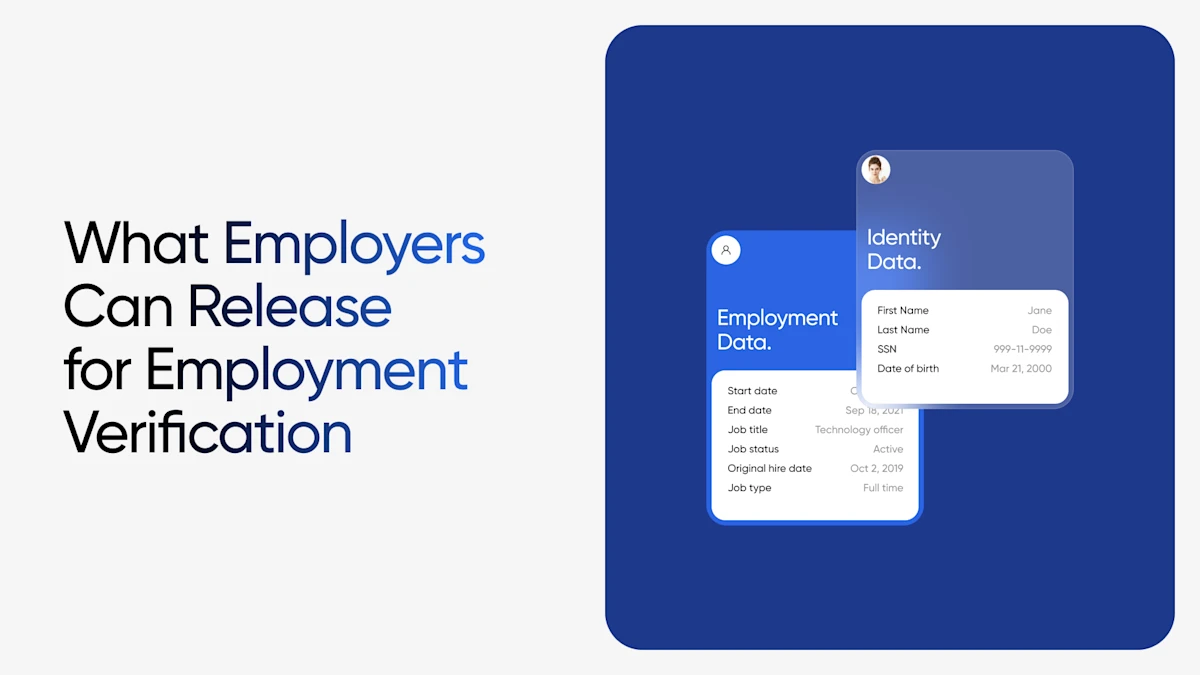
No federal law bars employers, lenders and landlords from verifying your employment. However, some laws govern the collection and use of your personal information. Generally, employers are allowed to release the following:
- Dates of employment (e.g., September 2018 to November 2024)
- Job titles
- Employment status (full-time, part-time, etc.)
In many cases, employers can also share information about your job performance. For example, a previous employer may share you missed several days of work per month or struggled to meet deadlines.
Despite the few legal restrictions, some companies may prohibit supervisors from sharing more than an individual’s job title and employment dates. This reduces the risk of defamation claims and protects each employee’s privacy.
Employment Verification Privacy Laws: What You Need to Know
The Fair Credit Reporting Act does not regulate the verification of employment, but it does govern the use of background checks for employment purposes. If your employer uses consumer reports as part of the screening process, they must comply with these aspects of the FCRA:
- Employers must obtain written consent before accessing consumer reports.
- You have the right to know what’s in your consumer reports.
- Your employer must notify you any time they use the information in your consumer reports against you.
- You have the right to dispute inaccurate information.
The FCRA protects your personal information while allowing disclosures under certain conditions. This makes it possible to qualify for a new job without making your personal information public.
What Employers Cannot Release During Verification
Employers can’t release information about your health history, and they can’t reveal personal reasons for leaving your job. For example, if you leave a high-pressure job to spend more time with your children, your previous employer can’t share that information.
State and federal laws also prohibit employers from sharing your Social Security number or home address.
The Role of Written Consent in Employment Verification
Some companies use manual verification, which relies on verification letters or phone calls during the application process. Before verifying your employment, the requesting party should obtain your written consent. Additionally, the consent form should describe the information being requested.
The Truv employment verification process is different. Instead of relying on letters and phone calls, Truv connects directly to payroll providers via APIs with an easy process whereby consumers login to their payroll providers in a streamlined experience with Truv, giving employers, lenders and landlords access to real-time data simply by credentialing in as they would at work.
Lenders typically require 2 years of employment data, so if you’ve had multiple employers in the last 2 years, you can connect to multiple payroll providers from a single portal. It takes an average of 30 seconds for a borrower to log in and authorize access to their employment information, making Truv’s consumer-permissioned process faster and more accurate than traditional verification methods.
How Employers Handle Employment Verification Requests
Some employers have supervisors or HR representatives respond to requests for verification of employment. This approach often causes delays, as the designated individual may be out of the office or need to review your employment file.
To save time, some employers use employment verification companies, which are third-party services dedicated to performing verifications. It’s common for employers to have different verification processes in place, but every company should follow the laws in their jurisdiction when releasing information.
Once you understand your rights, don’t be afraid to ask questions about your company’s approach to employment verification. A manager or HR staffer should be able to explain how long it takes to complete a verification and what type of information they plan to release.
FAQs
What information can be released for employment verification in New York?
In New York, employers can release job titles, start dates and end dates. No laws prohibit an employer from sharing information about an employee’s job performance, but due to liability concerns, many companies refuse to answer performance-related questions.
When someone calls to verify employment, what do they ask?
It depends on the purpose of the verification. If an employer calls about a prospective employee, they may ask questions about the candidate’s performance. It’s also common to verify job titles and employment dates.
When lenders conduct employment verification, they look for information to help them confirm an applicant has a stable employment history. In addition to confirming job titles and dates of employment, lenders typically perform income verification to determine whether an applicant can afford monthly loan payments.
What information can be released for employment verification in Texas?
Texas doesn’t have laws restricting the release of employment dates, job titles or information related to job performance. If you’re in Texas, previous employers can even share why you were terminated, if applicable. However, many employers have a policy of providing limited information, such as job titles and dates of employment only.


